


The Rise and Fall in Retail eCommerce: Analysing May 2026
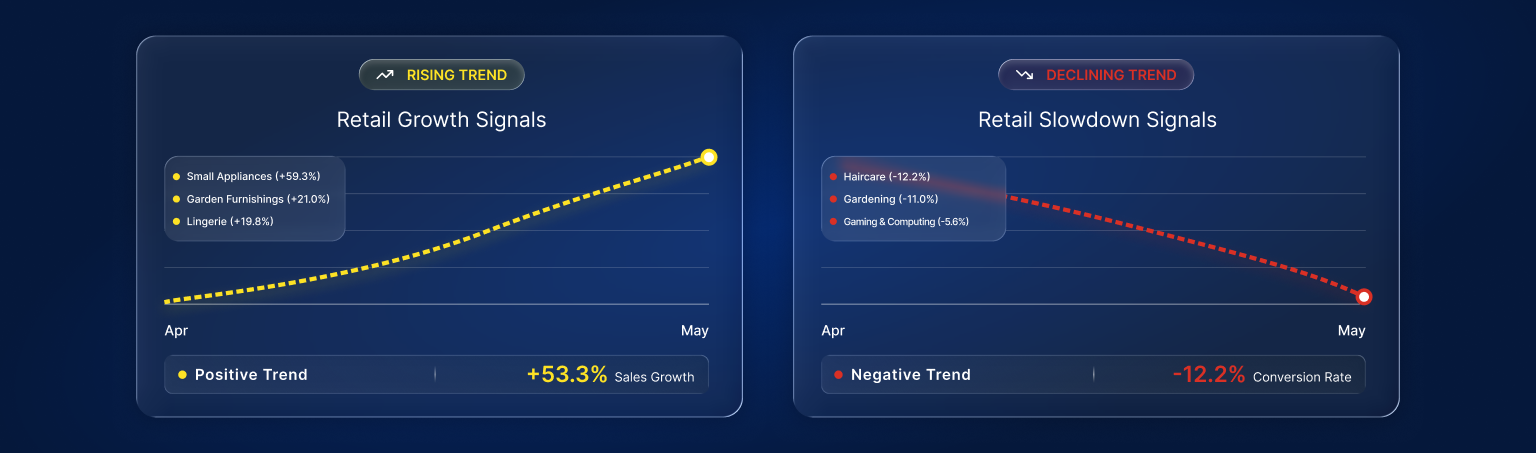
May 2026 saw retail eCommerce growth strengthen, driven by strong performances in Small Appliances, Garden Furnishings, and Lingerie, while Haircare, Gardening, and Gaming & Computing faced declining demand. As consumer priorities continue to shift, retailers that combine data-driven insights with strategic optimisation will be better positioned to identify growth opportunities and adapt to changing market trends.
10 Jun, 2026
May 2026 delivered a stronger performance for retail eCommerce, with overall market growth accelerating compared to the previous month. While several categories experienced impressive gains, others continued to face challenges as shifting consumer priorities influenced spending patterns. Below, we explore the key winners and losers from May and what retailers should focus on as we move into the summer trading period.
The Rise & Fall of products, brands, and retail trends is increasingly shaped by data, automation, and AI. However, the real advantage comes from understanding the context behind the data, not simply automating decisions at scale. At ShoppingIQ, we believe the strongest strategies combine intelligent automation with human expertise to read between the lines and react strategically. This is something we apply every day, combining real-time data signals with human insight to help retailers make smarter commercial decisions.
Introduction
May 2026 saw the Total Market grow by 5.0% month-on-month (MoM) and 2.7% year-on-year (YoY), indicating a healthy uplift in retail activity. Seasonal purchasing, home improvement projects, and strong demand for practical household products helped drive growth across several categories.
However, performance was far from uniform. Categories such as Small Appliances, Lingerie, and Garden Furnishings enjoyed significant momentum, while Haircare, Gardening, and Gaming & Computing experienced declines. As consumers continue to balance discretionary spending with essential purchases, retailers must adapt their strategies to capitalise on emerging opportunities.
Top Performing Categories (MoM)
1. Small Appliances (+59.3%)
Small Appliances was the standout performer in May, recording an exceptional 59.3% MoM increase. Demand for products that simplify daily life, improve energy efficiency, and support home cooking continues to grow. Retailers should leverage this momentum through bundled offers, product demonstrations, and highlighting cost-saving benefits.
2. Garden Furnishings (+21.0%)
Garden Furnishings continued its strong seasonal performance, delivering 21.0% MoM growth. With warmer weather encouraging consumers to invest in outdoor living spaces, retailers are benefiting from increased demand for outdoor furniture and accessories. Promotional campaigns focused on summer entertaining and outdoor lifestyle trends are likely to sustain this growth.
3. Lingerie (+19.8%)
Lingerie maintained its strong momentum with a 19.8% increase MoM. Seasonal wardrobe refreshes and continued demand for comfort-focused products are supporting growth in this category. Retailers should continue to promote new collections, inclusive sizing, and seasonal offers to maximise sales.
Underperforming Categories (MoM)
1. Haircare (-12.2%)
Haircare experienced the sharpest decline in May, falling 12.2% MoM. While the broader Beauty category remains positive year-on-year, consumers may be delaying non-essential beauty purchases or shifting spending towards other personal care products. Retailers should focus on value-driven promotions and product bundles to stimulate demand.
2. Gardening (-11.0%)
After benefiting from seasonal demand earlier in the year, Gardening declined by 11.0% MoM. As consumers complete spring gardening projects, spending appears to be shifting towards outdoor furniture and leisure-focused garden products. Retailers may need to introduce summer-themed campaigns to maintain engagement.
3. Gaming & Computing (-5.6%)
Gaming & Computing continued to struggle, posting a 5.6% MoM decline. Higher-value technology purchases remain under pressure as consumers prioritise essential spending. Retailers should consider targeted promotions, financing options, and gaming accessories to encourage purchases.
Notable Sectors Trends (YoY)
1. Gifts (+15.2%)
The Gifts sector increased 15.2% YoY, highlighting continued consumer interest in gifting products. Seasonal promotions and curated offerings can further capitalize on this trend.
2. Mobile Commerce (+9.6%)
Mobile Commerce rose 9.6% YoY, reflecting ongoing adoption of smartphones and mobile shopping. Retailers should continue optimizing mobile platforms and offering app-based promotions.
3. Electrical (+7.0%)
The Electrical sector showed a solid 7.0% YoY growth, driven primarily by Small Appliances. This suggests sustained consumer demand in home electronics and appliances, and retailers should focus on energy-efficient and smart home solutions.
4. Beer & Wine (-16.1%)
The Beer & Wine sector experienced a notable 16.1% YoY decline, suggesting a significant contraction in consumer demand. Retailers may need to focus on promotions or re-evaluate assortment strategies.
Looking Ahead: What Retailers Should Prioritise
For Stronger MoM Categories
-
Small Appliances: Retailers should capitalise on strong consumer demand by promoting energy-efficient products, smart home devices, and kitchen appliances. Bundled offers and financing options can further boost conversion rates.
-
Garden Furnishings: With outdoor living season at its peak, retailers should continue highlighting outdoor furniture, dining sets, and decorative accessories. Content-led campaigns showcasing outdoor lifestyles can drive additional engagement.
-
Lingerie: Maintaining a focus on comfort, inclusivity, and seasonal collections will help retailers build on current momentum. Personalised recommendations and loyalty rewards can further strengthen customer retention.
For Weaker MoM Sectors
-
Haircare: Promotions centred around self-care, product bundles, and subscription models could help re-engage consumers. Highlighting premium ingredients and professional-quality products may also encourage spending.
-
Gardening: Retailers should shift messaging from planting and maintenance toward outdoor enjoyment and seasonal upgrades. Cross-selling with Garden Furnishings may help recover lost demand.
-
Gaming & Computing: Retailers should focus on accessories, peripherals, and promotional bundles that offer lower entry price points. Limited-time offers and financing plans may encourage consumers to return to larger technology purchases.
Conclusion
May 2026 presented a positive picture for retail eCommerce, with overall market growth strengthening to 5.0% MoM. Categories linked to home improvement, outdoor living, and practical household purchases performed particularly well, with Small Appliances, Garden Furnishings, and Lingerie leading the way.
At the same time, challenges remain for categories such as Haircare, Gardening, and Gaming & Computing, which continue to face shifting consumer priorities and spending pressures. As retailers head into the summer months, success will depend on identifying growth opportunities, responding quickly to changing demand patterns, and delivering value-driven experiences that resonate with today's consumers.