



The Rise and Fall in Retail eCommerce: Analysing March 2026
Discover the key retail eCommerce trends for March 2026. From strong growth in garden products to declines in Beers & Wines, explore the month-on-month performance and what retailers should focus on for Q2 growth.
16 Apr, 2026
Introduction
March 2026 presented a volatile month for retail eCommerce, continuing to reflect the early-year adjustment period. After the fluctuations seen in February, March showed mixed results across various categories. The Total Market showed a slight recovery from the previous month, but performance varied significantly across sectors.
Unlike the post-peak reset observed in January, where most sectors struggled, March revealed a greater divergence in performance. While some categories experienced strong rebounds, others continued to underperform as consumer behavior remained cautious, particularly in discretionary spending. Retailers need to evaluate the shifts in demand carefully as we move into Q2.
Below, we break down the top-performing and underperforming sectors based purely on month-on-month (MoM) performance, followed by broader insights that retailers should consider as they adjust their strategies for the coming month
Top Performing Sectors (MoM)
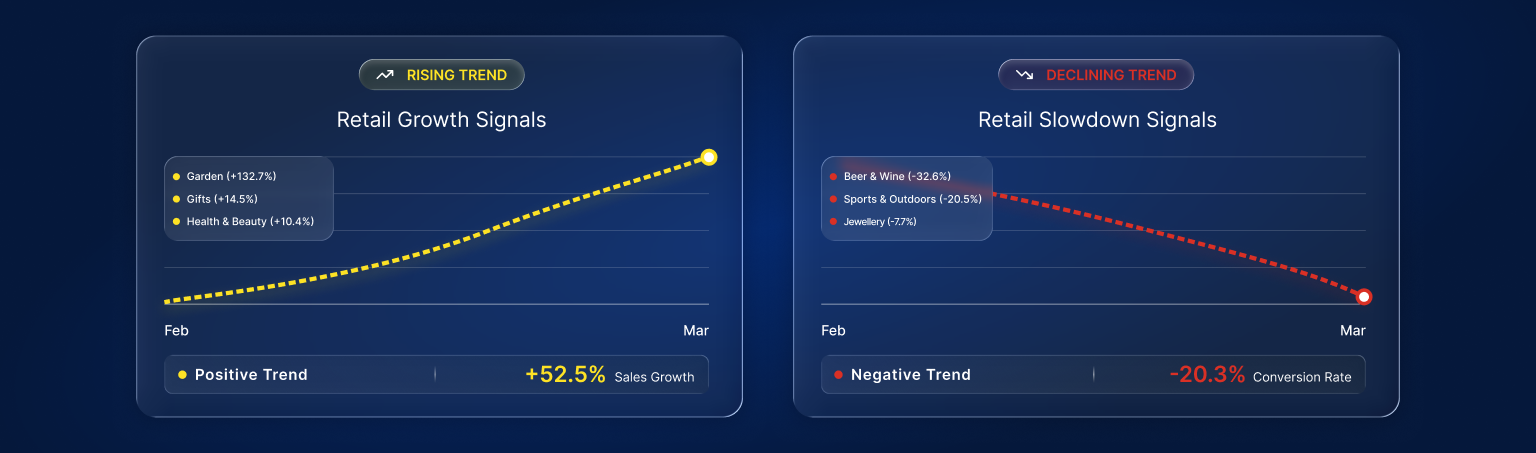
1. Garden (+132.7%)
Leading the charge for March, the Garden category showed an outstanding MoM growth of 132.7%. This increase highlights a strong pre-seasonal demand for outdoor products as consumers begin to prepare their homes for the spring and summer months. Garden Furnishings also saw impressive growth (+135.6%), indicating an early move towards outdoor living and home upgrades.
2. Gifts (+14.5%)
The Gifts category continued its positive performance with a solid MoM growth of 14.5%. This could be attributed to events such as International Women’s Day and early preparation for upcoming holiday seasons, keeping gifting at the forefront of consumers' minds.
3. Health & Beauty (+10.4%)
Health & Beauty remained robust with a growth of 10.4%. Subcategories such as Haircare (+12.3%) and Skincare (+25.5%) performed exceptionally well, benefiting from sustained demand for self-care and beauty products as consumers prioritise wellness and grooming.
Under Performing Sectors (MoM)
1. Beer & Wine (-32.6%)
Beer & Wine recorded a significant decline of 32.6% MoM, continuing the trend from February. The drop likely reflects the conclusion of holiday season indulgence and the post-festive dip in alcohol sales. Retailers in this sector may need to adapt by introducing targeted campaigns that align with the upcoming seasonal events like Easter and summer.
2. Sports & Outdoors (-20.5%)
Despite a strong start to the year, the Sports & Outdoors category fell by 20.5% MoM. This could be a sign of waning interest in fitness-related products following the post-New Year’s resolution surge. As weather improves, retailers may want to shift focus towards outdoor recreational activities to reignite interest.
3. Jewellery (-7.7%)
Jewellery saw a notable decline of 7.7% MoM, reflecting the general softness in discretionary spending. Unlike categories such as Health & Beauty, which saw consistent demand, jewellery typically experiences more seasonal fluctuations, and as such, March may not have been the right time for high-value purchases in this category.
To dive deeper into optimising your Google Shopping performance and feed management, explore detailed strategies here
Other Notable Category Movements
Clothing (Overall: +12.1%)
The clothing category showed moderate recovery, growing by 12.1% MoM, with Womenswear (+14.3%) leading the charge. However, Menswear (-8.4%) and Footwear (-8.4%) faced difficulties, continuing the broader trend of fluctuating demand for fashion products. Retailers in this sector should look into fine-tuning their inventory to address evolving trends and seasonal shifts.
Electrical (Overall: -2.5%)
Electrical items saw a decline of 2.5% MoM, with subcategories such as Audio (+7.5%) and Large Appliances (+5.2%) performing relatively well. Small Appliances, however, faced a drop of -6.7%, showing that consumers are cautious with discretionary electrical spending despite some strong performances.
Mobile Commerce (+3.8%)
Mobile Commerce experienced steady growth, with both smartphones (+4.4%) and tablets (-0.1%) seeing different trajectories. While mobile phones continue to perform well, the slow recovery in tablets highlights an opportunity for retailers to push promotions and deals in this category to revive interest.
Looking Ahead: What Retailers Should Prioritise
For Stronger MoM Sectors
-
Garden & Garden Furnishings: Retailers should capitalise on the growing interest in outdoor spaces by pushing early spring promotions and preparing for peak garden season. Emphasising eco-friendly, sustainable gardening products could further tap into consumer interest.
-
Health & Beauty: As skincare and wellness products continue to dominate, retailers should focus on creating value-driven bundles and skincare regimes. Promotions around self-care, especially leading into summer, would resonate with consumers seeking well-being products.
For Weaker MoM Sectors
-
Beer & Wine: Retailers may need to consider discounts or seasonal campaigns that align with upcoming events such as Easter and summer barbecues to reignite interest in alcohol-related sales.
-
Sports & Outdoors: Shifting the focus towards outdoor recreation could capture consumer interest as warmer months approach. Campaigns centered around hiking, biking, and outdoor leisure could help revitalise demand.
-
Jewellery: Retailers should lean into special events and targeted gifting periods, focusing on high-value pieces for upcoming holidays like Mother's Day.
Conclusion
March 2026 marked a month of contrasts within retail eCommerce. While certain sectors, particularly those linked to outdoor living and wellness, thrived, others struggled, particularly those relying on post-holiday surges or discretionary spending. The key for retailers moving into Q2 will be to align inventory, promotions, and messaging with seasonal demand shifts and consumer behaviors. Retailers who can swiftly adapt to changing trends and consumer moods will be in the best position to capture growth opportunities as the year progresses.